
Clinically Reviewed by Dr. Daniela Canales
Lead Dentist at East Quarter Dental | Updated March 2026
Have you noticed a chalky white spot on your tooth and wondered, “can you reverse a cavity before it turns into a painful hole”?
It is a very common question among patients who fear the drill. The good news is that early decay does not always mean you need a filling.
If caught early enough, the answer to “can you reverse a cavity” is a resounding yes. By understanding how your teeth lose and gain minerals, you can stop the damage in its tracks and save your natural tooth structure.
Understanding the Science: Mineral Loss
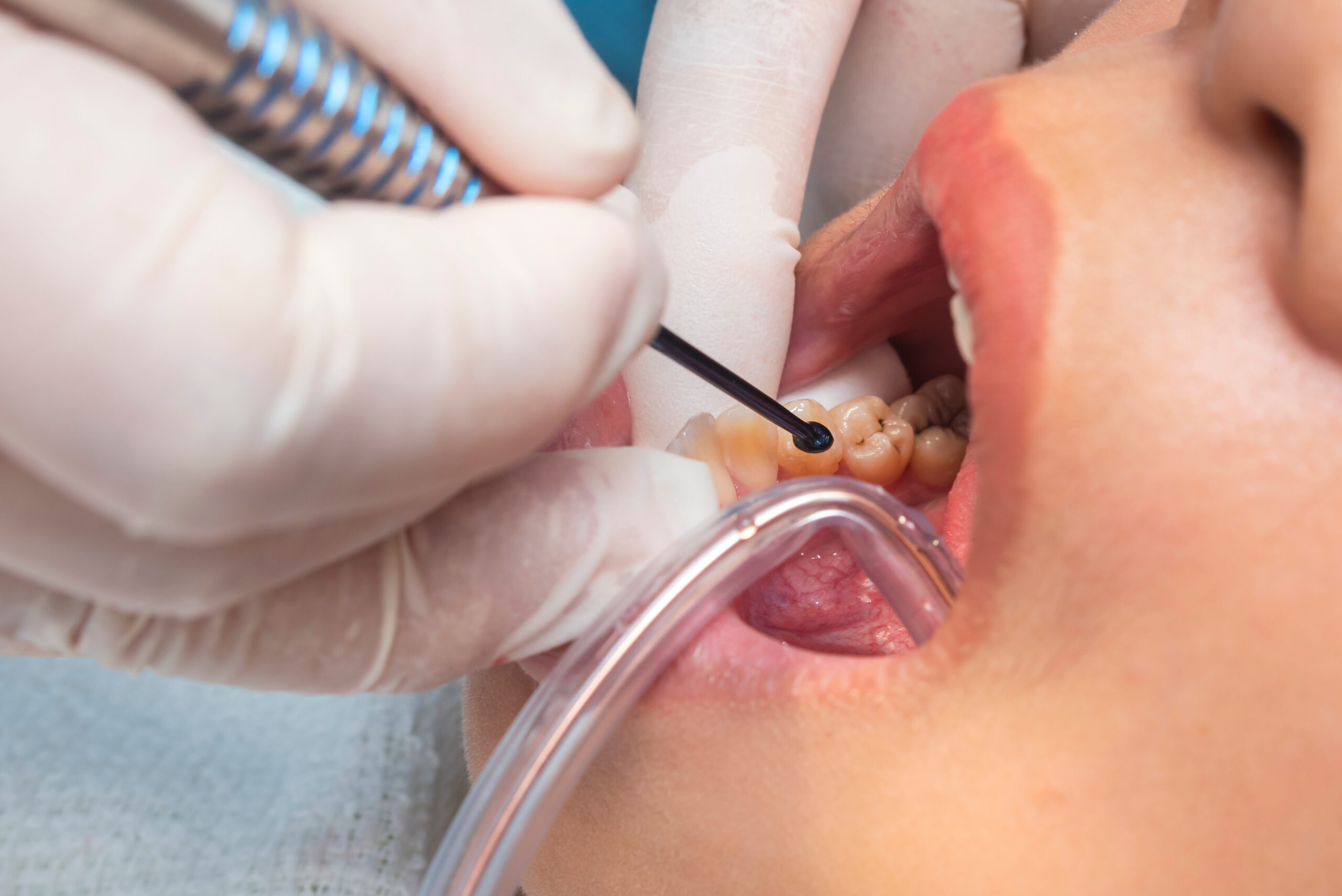
Tooth decay starts as a simple chemical reaction. Bacteria in your mouth feed on sugar and create acid. This acid strips essential minerals away from your enamel, a process called demineralization.
This tooth mineral loss is the invisible start of a cavity. At this stage, the surface is still intact, but it is becoming softer and more porous. If you intervene now, you can heal the tooth.
The Critical Difference: Reversible vs. Irreversible
Not all cavities are created equal. Early tooth decay, often appearing as white spot lesions near the gumline, is still in the “safe zone.” This stage is known as incipient caries.
Because the decay is limited to the outer enamel layer, enamel repair is still physically possible. The structure has not yet collapsed, meaning we can rebuild it from the inside out.
However, once the decay breaks through the enamel into the softer dentin layer, the damage becomes permanent. At that point, natural remineralization is no longer possible, and you will effectively need a restoration.
| Clinical Feature | Incipient Stage (Reversible) | Advanced Stage (Non-Reversible) |
|---|---|---|
| Visual Indicators | Incipient lesions (white chalky spots); the enamel surface is intact. | Cavitated lesions (dark spots or holes); visible discoloration. |
| Symptoms | Asymptomatic; usually no pain or thermal sensitivity. | Localised pain; acute sensitivity to hot, cold, or sweets. |
| Clinical Response | Remineralization therapy (Curodont™), dietary modification, and fluoride. | Restorative intervention (fillings, crowns, or root canal therapy). |
| Recovery Timeline | 3–6 months for mineral density to stabilize with consistent care. | Immediate professional intervention is required to arrest the infection. |
Beyond Fluoride: Modern Solutions
For decades, dentists relied solely on fluoride treatment to strengthen soft enamel. While fluoride is effective at surface hardening, it works slowly and often cannot penetrate deep into the lesion.
Today, non-invasive dentistry offers faster solutions for cavity prevention. New technologies, like peptide-based therapies, act as a scaffold to regenerate the tooth structure deep inside the early defect.
This method allows minerals like calcium and phosphate to rebuild the tooth faster than nature could alone. It is a powerful way to stop decay without ever touching a drill.
The Cost of Waiting
Time is your biggest enemy when trying to save a tooth. The window to fix early tooth decay without physical intervention is small.
If you ignore the early signs, the lesion will grow. Treating it now means no shots, no drills, and no pain. Waiting means a guaranteed filling or crown later.
Remineralization at East Quarter Dental
Our office in the East Quarter district of Downtown Dallas focuses on conservative dentistry. We identify early-stage decay—known as incipient lesions—using digital diagnostics. At this stage, the enamel has lost minerals, but the physical structure remains intact. By applying professional-grade fluoride or calcium-phosphate treatments, we can often arrest the decay process without the need for a traditional filling.
Located near the intersection of the East Quarter, Deep Ellum, and Downtown Dallas, our practice is designed for the convenience of the local workforce. Whether you are coming from an office in the Main Street District or live in an East Quarter loft, we provide efficient clinical exams that fit into a professional schedule. We prioritize saving your natural tooth structure through advanced preventative protocols.
Your Next Step for a Drill-Free Smile
So, can you reverse a cavity if you act quickly and use the right treatments? Absolutely. You have the power to heal your enamel before it requires invasive work.
Don’t wait for sensitivity or pain to start. The best technology to help with this reversal today is Curodont™ Repair Fluoride Plus, available here at East Quarter Dental.
Schedule an evaluation with us to see if you are a candidate for this pain-free treatment. Remember, asking “Can you reverse a cavity?” is the first step toward a healthier, drill-free smile.
2109 Commerce Street, Suite 100 | Dallas, TX 75201