
Discovering white spots on teeth after braces can be disappointing after years of treatment aimed at achieving a perfect smile. These chalky-white areas contrast sharply with the healthy enamel and are often a primary aesthetic complaint immediately following the removal of brackets.
The appearance of white spots on teeth after braces is usually caused by inadequate oral hygiene during the time the appliances were affixed, leading to mineral loss. Patients seeking a solution need treatments that specifically address these post-braces white marks effectively, going beyond simple aesthetic camouflage.
What Exactly Causes White Spots on Teeth After Braces?
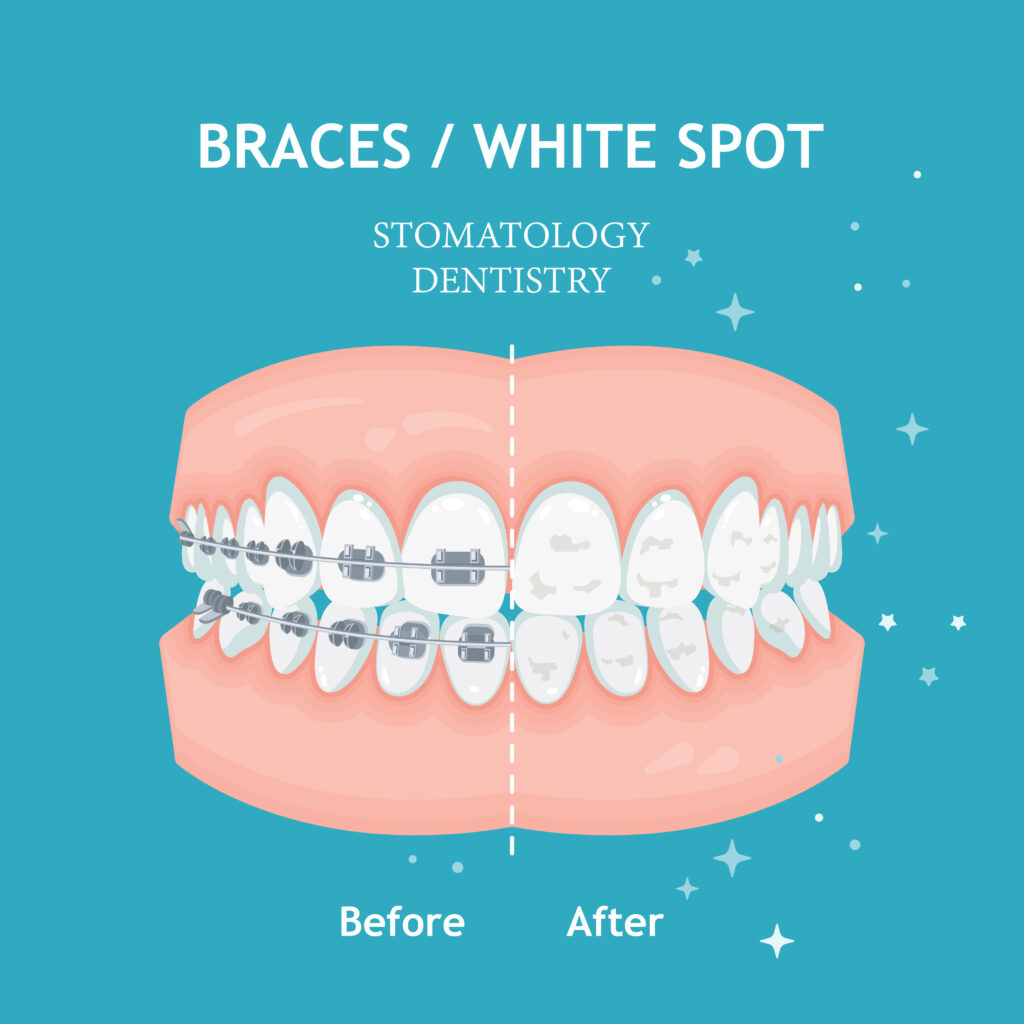
The presence of white spots on teeth after braces is not merely cosmetic, it signals a process called demineralization. This occurs when plaque acid is allowed to accumulate around the bracket edges, where brushing is difficult, eroding the calcium and phosphate structure of the enamel.
These white spot lesions (WSLs) are technically the very first stage of tooth decay, often appearing opaque and chalky. They are proof of mineral loss from the subsurface enamel, leaving the area porous and noticeably different from the adjacent healthy, translucent enamel.
If left untreated, these demineralized areas can progress into actual cavities, requiring more invasive dental interventions in the future. Therefore, addressing post-braces white marks is a matter of both health and aesthetics for patients who have completed their orthodontic journey.
Are White Spots on Teeth After Braces Just an Aesthetic Problem?
While the visual impact is the primary concern, white spots on teeth after braces represent a structural weakness in the enamel layer. They indicate areas where the protective outer shell of the tooth has been compromised due to prolonged acid exposure.
These demineralization spots are more susceptible to further decay than healthy enamel, acting as magnets for bacteria and food particles. Treating these lesions early prevents the need for drilling and filling later on, safeguarding the tooth’s structural integrity over time.
Many patients underestimate the health implications of these early caries lesions because they do not feel pain. However, any dental professional views these white areas as active sites of mineral loss that urgently require a robust remineralization treatment strategy.
Why Won’t Standard Teeth Whitening Fix White Spots on Teeth After Braces?
Traditional teeth whitening works by penetrating the entire enamel structure to break down chromogens (stain molecules), lightening the overall color of the tooth uniformly. It does not replace lost minerals or rebuild the enamel.
When used on teeth with white spots on teeth after braces, the whitening process brightens both the healthy enamel and the demineralized white spot simultaneously. Because the white spot is already opaque and chalky white, the contrast with the now brighter surrounding enamel often becomes more noticeable, rather than less.
Therefore, relying on common cosmetic teeth bleaching methods alone often exacerbates the aesthetic issue. The correct solution requires a targeted approach that specifically addresses the mineral deficit within the white spot lesions themselves, rather than just changing the background color of the tooth.
Understanding the Visual Paradox of Whitening
The visual appearance of post-braces white marks is due to light scattering off the porous, air-filled spaces within the demineralized enamel. Healthy enamel is translucent, allowing light to pass through.
Whitening simply makes the healthy, translucent enamel lighter. Because the white spot is already extremely opaque, the difference in opacity—the stark contrast—is only amplified. This is why patients report disappointment after using whitening products for white spots.
The Need for Targeted Mineral Restoration
Effective treatment for white spots on teeth after braces must aim to reduce the porosity of the white spots. By filling these pores with minerals, the enamel becomes more translucent, allowing light to pass through like the surrounding healthy enamel, thereby masking the visibility of the lesion.
The goal is not to bleach the spot but to remineralize it, essentially reversing the initial acid attack. This leads to a naturally uniform appearance, which is far superior to trying to mask the flaw with aggressive cosmetic treatments that do not strengthen the tooth.
Introducing Guided Enamel Remineralization
For treating these lesions effectively and strengthening the enamel, dentists utilize guided technology. For instance, to treat these spots effectively and strengthen the enamel, we utilize the system Curodont™ Repair Fluoride Plus, a specialized approach to enamel repair technology. This product is engineered to help guide the growth of new enamel crystals directly into the demineralization spots.
How Does Curodont™ Repair Fluoride Plus Work on WSLs?
The Curodont technology uses a specialized peptide that self-assembles into a scaffold within the porous white spot lesions. This scaffold acts as a nucleus, attracting calcium and phosphate ions from the saliva and the applied fluoride to promote the growth of new enamel crystals.
This process essentially reverses the damage caused by the acid attack during orthodontic treatment. By filling the porous structure of the post-braces white marks with new mineral growth, the enamel becomes stronger, denser, and more translucent.
The result is a non-invasive, painless procedure that visually blends the white spot seamlessly with the surrounding healthy enamel, offering an excellent outcome for patients concerned about dental fluorosis or WSLs.
Is Curodont™ a Permanent Solution for White Spots on Teeth After Braces?
When successful, the repair achieved by Curodont is considered long-lasting because it facilitates the actual growth of new, natural enamel crystals within the lesion. This is fundamentally different from a surface application or a cover-up solution.
However, the permanence of the fix ultimately depends on the patient’s commitment to maintaining excellent oral hygiene after the treatment. If plaque is allowed to accumulate again, new white spot lesions can form elsewhere on the tooth.
Patients should view this treatment as an effective repair combined with a call to action for improved oral hygiene maintenance. Regular check-ups and fluoride use will ensure the successful long-term aesthetic and health results of the remineralization process.
Who is the Ideal Candidate for Remineralization Treatment?
The ideal candidate for a remineralization treatment like Curodont is a patient who has recently had their braces removed and exhibits superficial to moderate white spots on teeth after braces. The treatment is most effective on lesions that have not yet fully cavitated (turned into a hole).
It is also an excellent option for patients who wish to avoid drilling, shots, or other invasive procedures associated with traditional fillings. Anyone concerned about the aesthetic impact of their post-orthodontic marks should consult their dentist about this non-surgical approach.
Candidates must demonstrate a willingness to maintain a diligent home care routine, as the success of the repair relies on a clean, healthy oral environment. This ensures the newly formed enamel structure remains strong and intact over time.
What Other Treatments Are Available for White Spot Lesions?
Besides Guided Enamel Remineralization, other effective treatments exist for addressing white spots on teeth after braces, depending on the severity of the lesion. Microabrasion may be used for very shallow surface stains that are purely cosmetic.
For slightly deeper, non-cavitating lesions, Resin Infiltration (using products like Icon) is a popular choice. This involves applying a liquid resin that soaks into the porous lesion and is then hardened, effectively sealing the area and normalizing the light reflection.
In the case of deep or severe demineralization spots that have already begun to cavitate, the dentist may recommend traditional fillings or composite bonding. These methods, though more invasive, provide the necessary structural restoration for advanced damage.
Conclusion: Achieving a Uniform Smile After Orthodontics
Selecting the correct treatment for white spots on teeth after braces is crucial for completing your smile transformation successfully. It is essential to recognize that these areas are more than aesthetic flaws; they are signs of mineral loss.
Traditional methods, such as general whitening, often fail to resolve these white spot lesions because they do not address the underlying mineral deficit in the tooth’s structure. Effective treatment requires a targeted approach to rebuild the porous enamel.
Choosing advanced solutions like Guided Enamel Remineralization helps to structurally restore the tooth, making it stronger and visually uniform. This non-invasive method is often the preferred choice for patients wanting to eliminate post-brace white marks without drilling.
Consult your dental professional today to determine the best treatment plan to effectively and safely remove white spots on teeth after braces and ensure the long-term health and beauty of your newly straightened smile.